

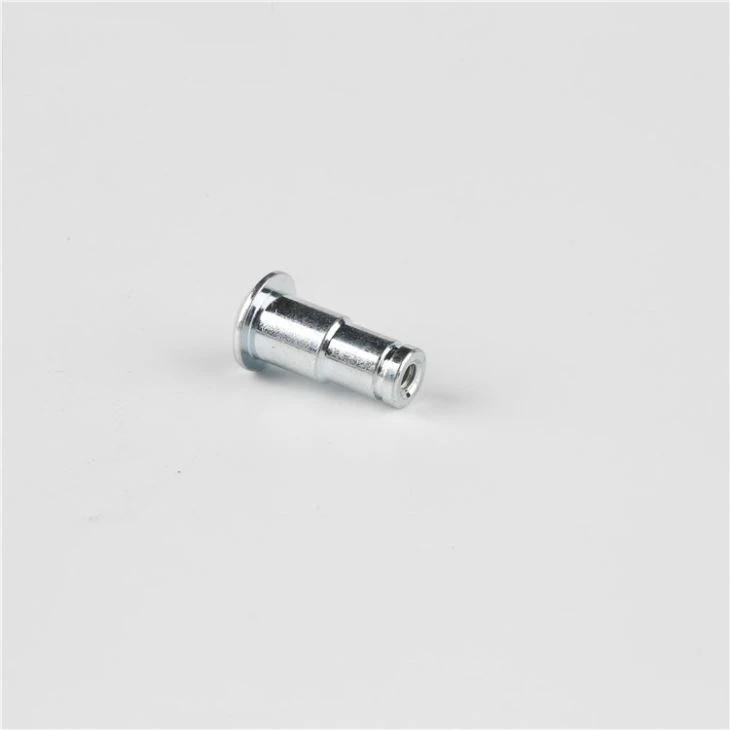
Physiotherapy Equipment High Strength Fasteners
Quick Details
Place of Origin:Guangdong, China (Mainland), Guangdong, China (Mainland)
Brand Name:Lanejoy, Lanejoy
Model Number:PG18
Standard:GB
Material:Carbon Steel
Surface treatment:Zinc Plated Polished
Certificate:ISO9001:2015
Color:Zinc White
Size:Customized
Price Terms:FOB,CIF,CRF,EXW and others
Delivery Time:Within 20 workdays after receive payment
Model:Pg18
Packaging & Delivery
Packaging Details
opp bag/carton
Delivery Time
7 days
Products Show

Factory and Our Team


Our Certificates

Production Process

Test Equipment

Cooperation Partner

Trade Show
Main Markets | Total Revenue(%) |
Southeast Asia | 20% |
South Asia | 20% |
Mid East | 20% |
Eastern Europe | 18% |
Northern Europe | 10% |
North America | 10% |
Africa | 2% |

Packaging & Shipping


Grinding once can guarantee more punching times, thus reducing the number of sharpening and improving the production efficiency. Magnification gap can also reduce the cost of mold manufacturing. For example, for blanking 1. 5mm thick O8F cold plate, manual recommended gap value is 0. 15 ~ 0. 18mm, using wire cutting convex and concave die can not guarantee the mold gap (molybdenum wire diameter of 0. 12mm), so no Not cutting the convex and concave molds separately results in both material and man-hours. When a larger clearance is selected (about 20% of the material thickness), the problem can be solved, and the convex and concave dies can be successfully cut at a time, thereby reducing the cost of the mold manufacturing, and the quality of the punching film can also be guaranteed
Practice has proved that a reasonable enlargement of gaps can effectively guarantee the quality of blanking, and die life can be increased by 2 to 3 times.
There are many factors that cause cold die damage. The quality of die heat treatment process is a key factor to improve the service life of the die, and must be given enough attention. The heat treatment process is not suitable and it is easy to change the size of the mold. Cold working molds produce distortions, cracks, excessively high or low hardness, uneven hardness, etc. The fundamental reason is that the quenching or tempering process is imprope